You might be here because you feel angry and don't know why, or numb when you expected to cry, or fine on Tuesday and wrecked on Wednesday. Grief after losing a pet can feel chaotic, and the "stages of grief" are one way people make sense of it.
Here's what each stage often looks like after losing a dog or cat, what helps, and the most important thing to know about stages: you won't go through them in order, and you don't have to go through all of them.
Where the stages come from
The five stages (denial, anger, bargaining, depression and acceptance) come from the psychiatrist Elisabeth Kübler-Ross, who described them in her 1969 book On Death and Dying. She was writing about people facing their own deaths, and the stages were later applied to grief in general. Kübler-Ross herself said later that they were never meant to be a neat, step-by-step path.
So use them as a map of feelings you might recognize, not a checklist you're failing to complete.
Denial: "This isn't real"
What it can look like: reaching for the leash at walk time. Listening for nails on the floor. Setting out two bowls. Feeling oddly calm in the first days, as if it happened to someone else.
What helps: let it be. Numbness in the first days is the mind protecting you from taking in everything at once. Small, gentle acknowledgments, like saying their name out loud or looking at a photo, help the reality settle at its own pace.
Anger: "Why did this happen?"
What it can look like: anger at the vet, at yourself, at a family member who "didn't notice," at the friend who said "it was just a dog," or at your pet for leaving. Anger can also show up as irritability over small things.
What helps: anger is often grief with nowhere to go. Writing it down, a hard walk, or saying it to someone who won't judge can release some of it. If the anger is at a specific person, it usually softens with time; big conversations can wait.
Bargaining: "If only I had..."
What it can look like: replaying the last weeks. If only I'd gone to the vet sooner. If only I'd noticed the limp. If only I'd been home. With pets, this stage is often tangled up with guilt, especially after a euthanasia decision.
What helps: know that almost every pet owner goes through this. The "if only" list is the mind trying to find a version where you had control. Most of the time, what you knew then is not what you know now. If guilt is the heaviest part, our guide to coping with losing a dog has a section on it.
Depression: "I just miss them"
What it can look like: deep sadness, low energy, crying at unexpected moments, trouble sleeping or eating, not wanting to go to the places you went together. The house feels empty in a way that's hard to explain to people who haven't been there.
What helps: routine, rest and people who get it. Keep one or two small daily anchors, like a morning walk without them or calling a friend. This is the stage where talking to someone matters most. If the sadness makes it hard to function for weeks, please reach out to your doctor or a counselor; that's what they're there for.
Acceptance: "They were here, and they mattered"
What it can look like: remembering them with a smile more often than with pain. Being able to tell the funny stories. Thinking about what you'd like to do to honor them.
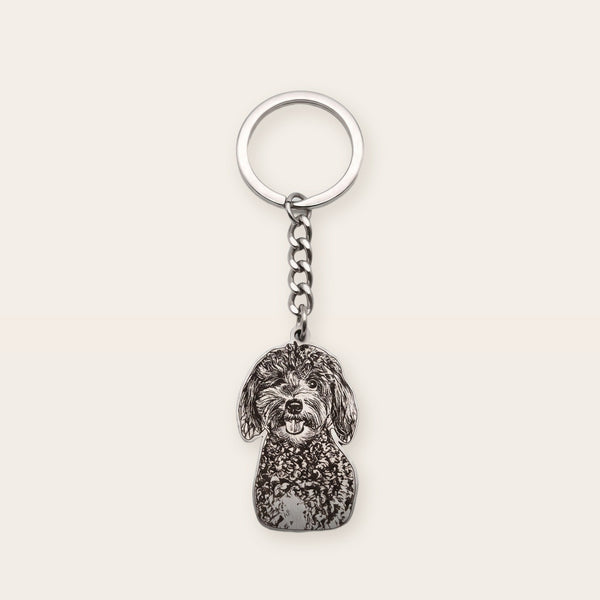
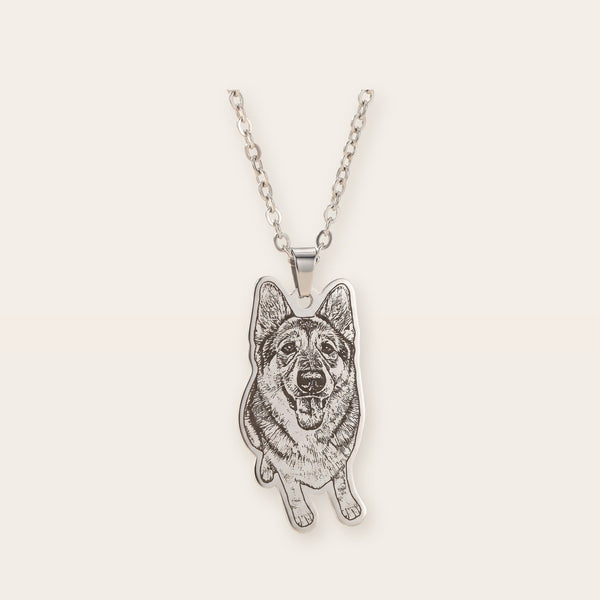
What helps: acceptance doesn't mean you're over it, or that you loved them less. It means the love has found a place to live. Many people mark this point with something lasting: a planted tree, a framed photo, a memorial idea that fits their pet, or a keepsake made from their photo, like our pet photo keychain.
Grief before the loss: anticipatory grief
If your pet is old or ill, you may be grieving already. That's called anticipatory grief, and it's very common in the last weeks or months with a senior pet. It can bring the same feelings: sadness, guilt, even anger. It doesn't mean you're giving up on them. It means you love them and you can see what's coming. Spending that time on small joys, like a favorite walk, a special meal or a slow afternoon together, can make it easier to look back on later.
How long does grief for a pet last?
There's no set answer. PetMD notes research suggesting the most intense grief often comes in the first two months, with sadness that can linger for six months to a year. Many people feel a wave around the anniversary, the first holidays, or the first time they see a dog like theirs. Waves don't mean you're going backward.
For the weeks and months after the first shock, our guide to healing from pet loss picks up where this one leaves off.
Frequently Asked Questions
What are the stages of grief after losing a pet?
The five stages commonly described are denial, anger, bargaining, depression and acceptance. With pets, bargaining often shows up as guilt ("if only I'd noticed sooner"). The stages don't come in a fixed order, and many people skip some or circle back.
Is it normal to feel this much grief for a pet?
Yes. A pet is part of your daily life in a way few others are, and losing them is a real loss. Grief for a pet can be as intense as grief for a person.
Why do I feel guilty after my pet died?
Guilt is one of the most common parts of pet loss, especially after a euthanasia decision or a sudden illness. It's usually the mind looking for control over something that couldn't be controlled. Talking about it, or writing it down, often helps it ease.
What is anticipatory grief?
It's grief that starts before a loss, often when a pet is old or seriously ill. It's normal, it doesn't mean you've given up, and it can be eased by focusing on good days together.
How long does it take to get over the loss of a pet?
Most people don't "get over" it so much as carry it more lightly over time. The hardest stretch is often the first couple of months, with some sadness lasting a year or more, and waves around anniversaries.