The cards stopped coming weeks ago. People have stopped asking how you're doing. And you still catch yourself listening for them when you come home. If that's where you are, this guide is for you.
Our guide to coping with losing a dog covers the first days. This one is about what comes after: the long middle stretch, when the shock has worn off but the missing hasn't.
Why it can feel harder later
In the first week, everyone understands. By week four, life expects you to be back to normal, and grief for a pet doesn't run on that schedule. PetMD notes research suggesting the most intense grief often comes in the first two months, with sadness that can last six months to a year. If you're still hurting at two or three months, you're not behind. You're right on time.
It can also hit harder later because the routines are gone. The 6 a.m. walk, the dinner dance, the dog at the door. Each missing ritual is a small loss, and they keep arriving after the main one.
Expect the firsts
The first walk on your old route. The first time you buy groceries without dog food. Their birthday. The first holidays. The first time you see a dog that looks just like them at the park.
These moments are often what knock people over months later. It helps to know they're coming, and to plan a little:
- Put their birthday and the anniversary in your calendar, and decide in advance how you want to spend the day.
- For the first holidays, keep one small tradition that includes them: an ornament, a photo on the table, a toast.
- If a place is too hard right now, it's okay to take a different route for a while.
Keep a bond, instead of "moving on"
Grief researchers have a name for something many pet owners already do: continuing bonds. The idea is that healing doesn't mean letting go of the relationship. It means changing its shape, so they stay part of your life in a new way.
That can look like:
- Talking to them, out loud or in a journal.
- Telling their stories to people who never met them.
- Keeping one object that was theirs where you'll see it every day.
- Doing something they loved, like a walk on their favorite trail, on hard days.
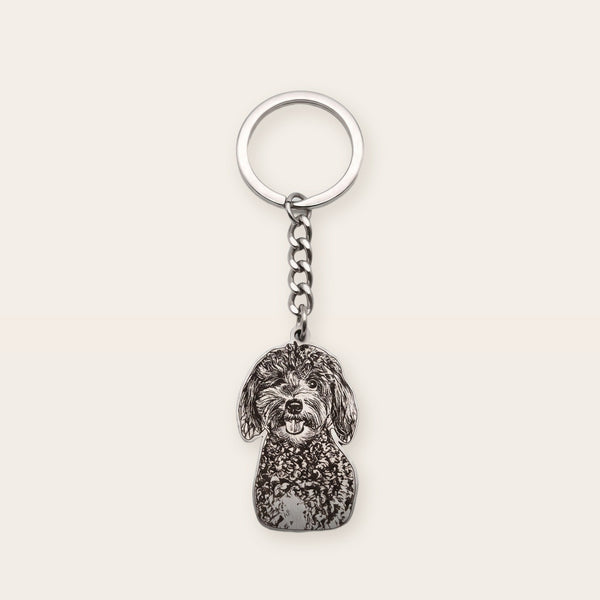
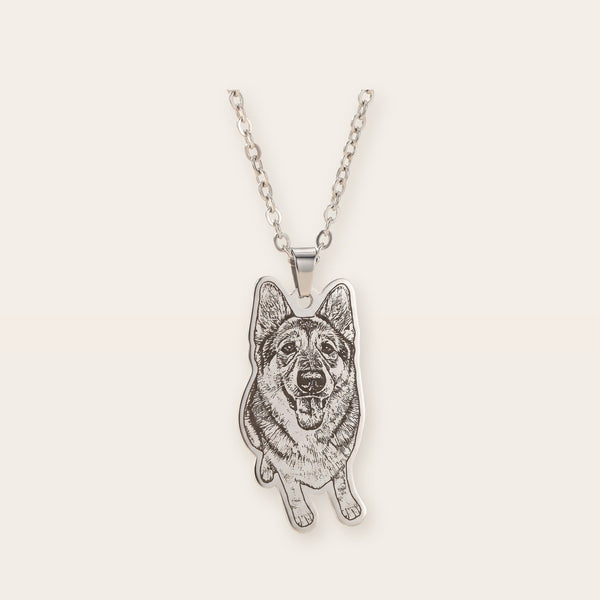
- Carrying something of them with you. Some people keep their tag on their keys; others choose a keepsake made from a favorite photo, like our pet photo keychain.
Our list of dog memorial ideas has many more.
When the guilt won't let go
For a lot of people, guilt is what lingers longest. A decision. A missed sign. A last day that didn't go the way they wanted. If the same "if only" keeps playing months later, try writing it down as a letter to your pet. Say what you wish you'd done differently, and then write what you know they'd say back. It sounds simple. For many people, it's the thing that finally loosens the grip.
Our post on the stages of grief after losing a pet explains why guilt shows up so often, and why it so rarely reflects what really happened.
When to get more help
Grief that's still heavy at a few months is normal. But please reach out to your doctor or a grief counselor if, for weeks at a time, you can't sleep, eat or work, you feel hopeless, or you're thinking about harming yourself. Pet loss is a real loss, and there are counselors and support groups who specialize in it. The Association for Pet Loss and Bereavement (aplb.org) is one place to start.
The new pet question
At some point, someone will ask if you're getting another dog. Some people know right away that a new pet will help. Others need years, or decide never to. None of these choices says anything about how much you loved the one you lost. A new dog isn't a replacement; when and whether is entirely yours to decide.
Signs you're healing
Healing rarely announces itself. It shows up quietly:
- You tell a funny story about them and laugh before you cry.
- You go a whole day without the ache, and then feel a little guilty about it. (That's normal too.)
- You can look at their photos and feel more warmth than pain.
One day you'll realize the love is still there and the sharpest part of the pain isn't. That's what healing from pet loss looks like. They're still with you, just in a different way.
Frequently Asked Questions
Is it normal to still grieve my pet months later?
Yes. Research cited by PetMD suggests the most intense grief often lasts around two months, with sadness that can continue for six months to a year. Waves around birthdays, anniversaries and holidays are common long after that.
How do I stop feeling guilty about my pet's death?
Try writing a letter to your pet about what you wish you'd done differently, then write what you think they'd say back. Talking with someone who understands pet loss can also help. Guilt after a pet dies is very common and rarely reflects how much care you actually gave.
How do I heal after losing a dog?
Give yourself time, plan for the hard dates, keep a few ways to stay connected (their stories, an object of theirs, a keepsake), and lean on people who understand. If grief stops you from functioning for weeks, talk to a doctor or a pet loss counselor.
When is the right time to get another dog?
There's no right time that applies to everyone. Some people are ready within weeks, others after years, and some never. A new dog doesn't replace the one you lost, so it's worth waiting until it feels like a choice rather than a way to fill the gap.